
MUSCAT — Kabeer Yousuf, a well-known scribe in town, never fails to surprise.
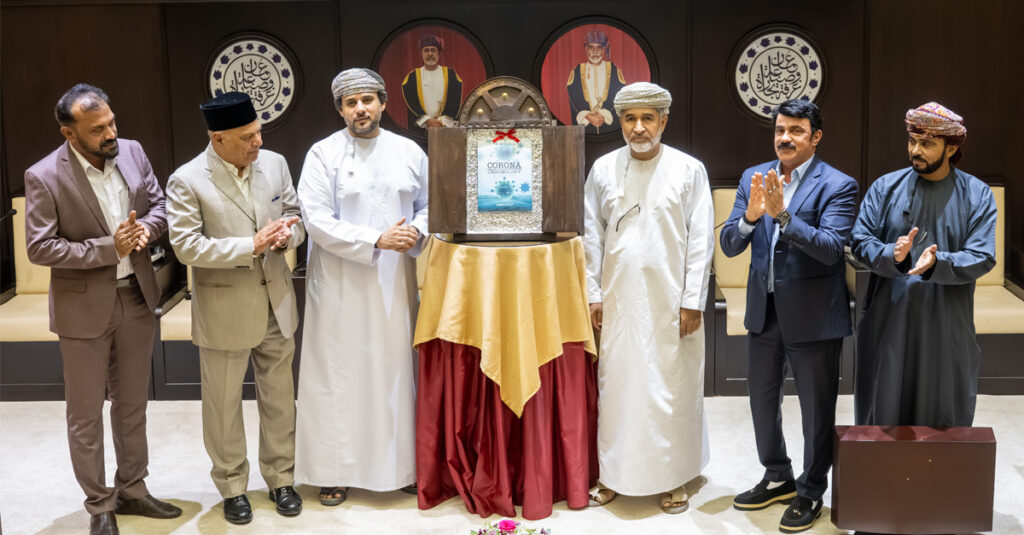
One day he is seen covering the daily news for the Oman Daily Observer, and the next, he is seen performing in well-enacted character roles on the big screen. And just recently, he was seen being commended by top Omani and other Indian officials and dignitaries for the latest surprise from his ever-expanding oeuvre: a non-fiction historical documentation and socio-journalistic book, titled ‘Corona Chronology – How a nation faced a pandemic’.
Produce at will
Kabeer, who says that he is a journalist first and actor, director and writer next, has proven once again that despite juggling many challenging roles, he can still produce at will. His tireless pursuit to all that he loves is often demonstrated by the number of roles he portrays and the many creative outputs he has produced. This A4 size, 240-pages reference document, which is a detailed account of how the Sultanate of Oman managed the COVID-19 crisis, was officially launched in Muscat at the Oman Chamber of Commerce and Industry (OCCI), recently. Those at the launch praised the book and its author for marking an important contribution to the region’s pandemic history.
Top launch
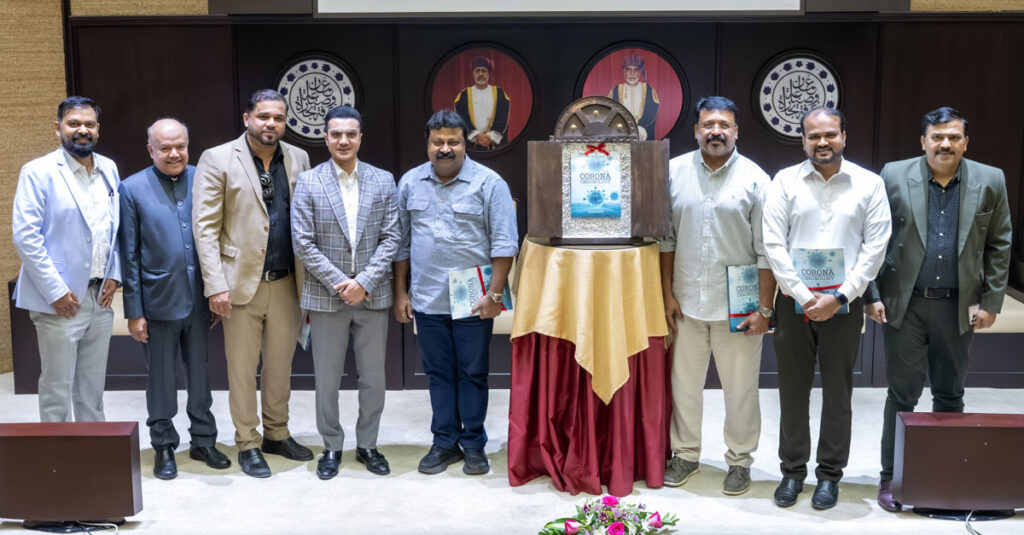
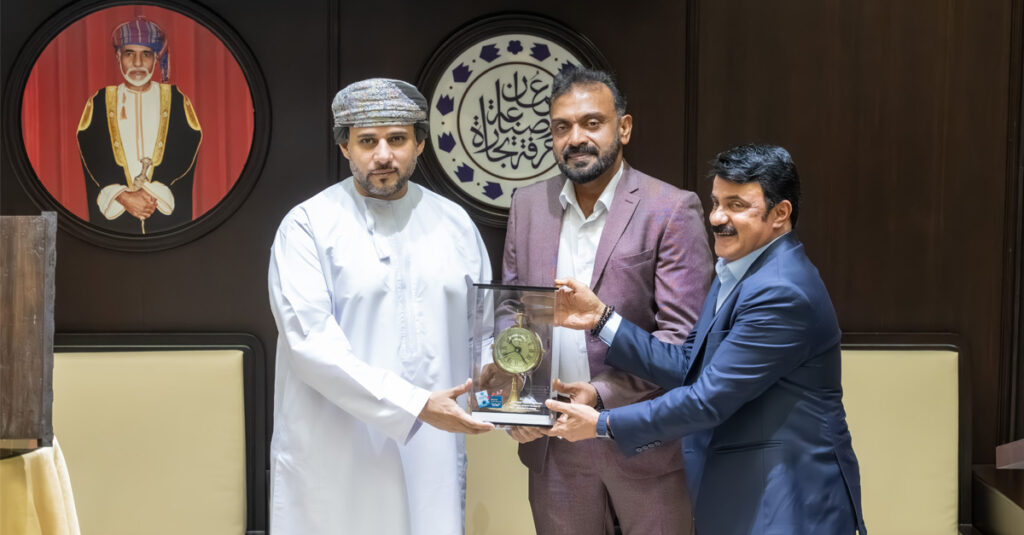
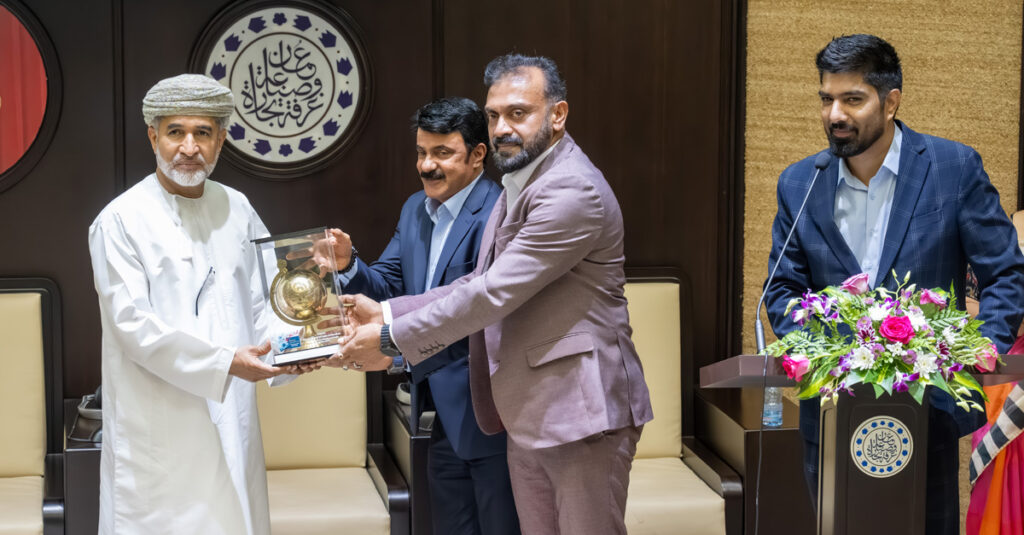
The book was launched by Dr Ahmed bin Salim Al Mantheri, undersecretary for planning and health regulation at the ministry of health and Faisal Abdullah Al Rawas, chairman of the OCCI. The launch function included Abdul Latif Uppala, board member of the OCCI and managing director of Badr Al Sama’a Group of Hospitals, Dr P Mohamed Ali, chancellor, National University of Science and Technology and Oman founder – Galfar and MFAR groups and a host of prominent members of the public.
The attendees lavished praise on the author and Kabeer later told the media that the launch and the adulation he received was “quite humbling”.
The biggest strength of this book, which fully documents the struggles, strategies, and resilience of a country, is that future generations will always have access to the lessons learned even if a ‘storm’, such as the pandemic, disrupts the present. Corona Chronology is distributed by WH Smith, Al Bhaj Books and Family Books.
Excerpts:
Give us an idea on the content of the book and why you chose this particular subject on Corona?
The book acts as a comprehensive, multi-layered window into the Sultanate of Oman’s relentless struggle and survival strategy against COVID-19 from 2019 to 2022. It captures the day-to-day timeline of the pandemic, detailing the critical interventions of the Supreme Committee, the coordinated frontline response of the health ministry and the Royal Oman Police, and the collective spirit of private institutions, community groups, and humanitarian initiatives—such as the Mission Wings of Compassion project that helped stranded expatriates return home. It also features exclusive interviews with key public and business figures who steered the community through those turbulent times.
As to why I chose this subject, I will say that today we live in a world fundamentally split into “pre-Corona” and “post-Corona” eras. The pandemic was a historic flashpoint that transformed human race and societal structures overnight. As a journalist on the ground in Oman, I watched a nation face an unprecedented existential threat with grace, meticulous planning, and sheer resilience. A period of such profound transformation and collective survival needed to be documented for posterity. It is an archetype of the era, serving as a testament to how we stood together and survived.
What category and genre does this book fall into?
This is a premium, aesthetically designed and produced coffee table book. It is designed to be highly visual and archival, blending narrative depth with curated imagery, striking layouts, and documentation that readers can pick up, browse through, and reflect upon. The book falls under the non-fiction as well as contemporary history and photo-journalistic categories.
Corona Chronology is a definitive, day-by-day chronicle of Oman’s fight against COVID-19. It juxtaposes the clinical reality of the timeline with the human element of survival, documenting how a country mobilised its medical, logistical, and social resources to safeguard its people.
How many years did you take to document the material for this book?
The documentation and intense research for this book took nearly three years. Since it is a chronological archive, the work began right at the height of the crisis as events unfolded in real-time from 2019 through 2022. Compiling the day-to-day data, validating the historical policy decisions, conducting high-profile interviews, and working closely with the creative team to shape the final layout required absolute precision and patience long after the restrictions lifted.
You are a journalist/scribe, an actor, and a writer (and a father and a husband). How do you manage to juggle all these aspects? What drives you to accomplish these many tasks?
People often ask how it’s possible to juggle being a senior journalist, a creative writer, a scriptwriter/filmmaker, and most importantly, a dedicated husband and a father to three wonderful children.Honestly, it doesn’t feel like “juggling” because these roles don’t fight with each other—they feed and complement each other.Journalism is my duty to the truth and the present; it keeps me grounded in reality, alert to human stories, and sharp with my research.
Creative writing and filmmaking/acting are the outlets for my soul. When you have a deep passion for storytelling, whether on paper, on a stage, or behind a camera, it doesn’t drain your energy—it refills it.
My family is the anchor for everything. Being a husband and a father gives me the ultimate purpose. They are my sanctuary and my biggest cheerleaders.
What drives me to accomplish these tasks is a fundamental belief that life is too vast to limit yourself to a single lane. If you have a passion for the arts and a duty to your profession, you don’t find time; you make time. It requires discipline, strict time management, and a highly supportive family, but when you love what you do, the exhaustion comes with an immense sense of fulfillment.
What were the challenges that you faced in documenting this book?
Documenting a pandemic while living through it presented unprecedented hurdles:
Emotional weight: Reporting on daily cases, restrictions, and the anxieties of the community took a heavy psychological toll. Writing a book on survival requires you to constantly revisit a time of global grief and uncertainty.
Data verification: In the digital age, a pandemic brings an onslaught of misinformation. As a journalist, my highest priority was absolute accuracy. Cross-referencing daily directives, ministry reports, and institutional responses to build a flawless chronological archive required painstaking double-checking.
Logistical constraints: Conducting in-depth interviews, coordinating with the creative team (a big shoutout to Jane Bickmore Jaffer, Veeyes Rahman, and the rest of the incredible layout and support team), and gathering high-quality visual assets during periods of movement restrictions required immense flexibility and patience.
What next? Any more surprises?
In the world of storytelling, the ink never truly dries! While ‘Corona Chronology’ has just hit the stands across Oman through WH Smith, Al Bhaj Books, and Family Books, my mind is always ticking.
Having previously written books on the life and vision of the late His Majesty Sultan Qaboos bin Said, and having explored filmmaking with projects like To Be Or Not To Be, Paaru and The Balloon Seller, I am always looking for the next canvas. You can certainly expect more creative ventures down the pipeline—whether it is a new literary focus on the rapidly evolving future of the region, or a fresh cinematic script exploring human relationships. For now, my focus is on ensuring this piece of history reaches as many hearts and bookshelves as possible!

0 Comments