
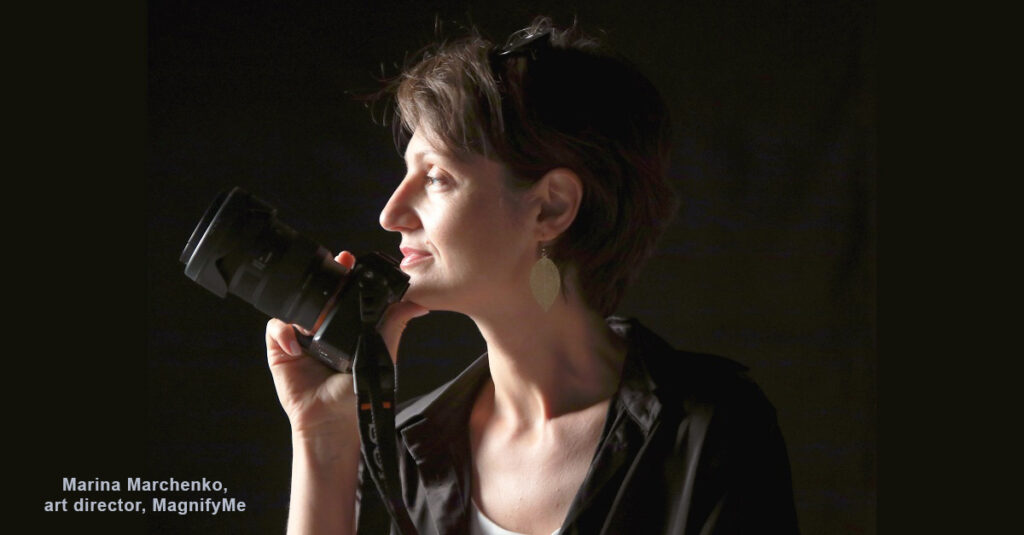
“Omani women are like beautiful gardens, hidden behind strong, high walls,”says a top Ukrainian photographer, who has since the last many years been living in Oman.
MARINA MARCHENKO, art director of MagnifyMe Photography, who left a country ravaged by war and then embraced by Oman, adds on: “These walls have been built over time – to protect, preserve, to offer shade from the burning sun and shelter from what does not belong. And when you are invited inside, you discover something truly special. Each garden is unique — filled with its own colours, scents, and textures. The beauty is not loud, but deep. There is a powerful femininity rooted in values, faith, family, career, and community.”
For the first time
“Many women I photograph are stepping in front of the camera for the very first time — not because they lack opportunity, but because they are used to giving to others first. It is part of the culture: to care, to support, to serve,” says Marina, responding to queries posed by Black & White.
“They often come to a session with doubts. Some are shy and don’t know how to be in front of the camera. Some are always busy — with work, family, and others — and they forget about themselves. Some compare themselves to others and don’t feel beautiful enough. Many want to belong, to be like others — and at the same time, they want to feel unique,” she adds.
Something very special
Marina is also a motivational speaker and specialises in women’s phototherapy. With 13 years of international photography experience, she has dedicated the last four years to the MagnifyMe project. She has held a solo exhibition in Moscow in 2022 and also presented her works at events and lectures in Muscat.
Three years ago, she moved to Oman from Ukraine. She had to leave behind the familiar and step into the unknown, she says. Although she didn’t know what she would find here in Oman, she did discover “something very special”. She found peace, warm people and space to grow as an artist. Today, she is a resident and lives here with her children. “Oman has truly become our home,” she says.
Excerpts:
You are a Ukrainian art director and photographer living in Oman… Since how long have you been living in Oman and what were the reasons that made you leave Ukraine and come to Oman? Are you a resident of Oman now and are you living here with your family?
I moved to Oman in 2022. At that time, I was going through a very emotional chapter in my life — both personally and otherwise. I had to leave behind the familiar and step into the unknown. I didn’t know what I would find here, but I discovered something very special: peace, warm people, and space to grow as an artist. Yes, I am now a resident and live here with my children. Oman has truly become our home.
You are still embracing photography in Oman and have begun the MagnifyMe project since the last few years. Could you please detail the photography work that you are engaged in here?
Photography is still my biggest passion — and in Oman, it took on new meaning. I started the MagnifyMe project as a way to help women and teens see their true selves through the camera. It is not just about beautiful pictures — it is about confidence, healing, and connection.
I work on different types of sessions: personal portraits, phototherapy experiences, family shoots, and also storytelling projects with a social impact.
Besides photography sessions, I also create educational programmes that use photography as a tool for self-expression, emotional awareness, and confidence — especially for youth and women. My dream is to publish a legacy book that tells the stories of women from different corners of Oman. For me, photography is more than images — it’s a way to educate, support, and help people feel truly seen.
Since you are focused on MagnifyMe, please explain how exactly your transformational photo sessions for women and teens help them embrace their individuality?
Each session is designed to be more than just a photoshoot. It is a quiet, personal journey. We begin by creating a safe, gentle space where a person can relax and be themselves — without pressure or expectations.
During the session, I guide them through body language and presence, helping them connect with something real inside. It is not about how they look, it is about how they feel. Many women and teens say afterwards: “I didn’t expect to see myself this way.”
Through this experience, they begin to see their beauty, their strength, and their story — sometimes for the first time. That’s the real magic of phototherapy.
How different a photographer are you in this respect, especially with what you term phototherapy? Could you expand on this?
When I use the word phototherapy, I don’t mean that something is broken or needs to be fixed. It started as something very personal — photography became a way of healing for me during a difficult time in my life. It gave me strength, clarity, and a deep sense of connection with myself.
Later, when I began working with women, I saw how this gentle and caring process could also support others. So for me, therapy means help, care, support, and healing. Through these sessions, I guide women toward self-awareness, self-care, and sometimes even self-healing — simply by creating a safe space where they can see their true selves with love and compassion.
What’s a day in the life of Marina Marchenko (with prime focus on your photography) like?
Every day is different — that’s what I love about this work. Some days are full of planning, editing, writing, or preparing moodboards and concepts for upcoming sessions. Other days, I am out shooting. Inspiration comes from many places: quiet personal moments, simple everyday scenes, meeting new people. Often, ideas are born when I feel the needs of others — because behind every need, there’s always a story. I live through stories, and I love creating them.
It is said that you believe in the “power of photography, body language and self-awareness”. How exactly do you imbibe these values into your photography?
For me, photography is not only about how someone looks — it’s about how they feel. I always pay attention to body language, to the way a person holds themselves, even to small details like how they sit or breathe. These things speak without words.
I try to help people feel calm and connected to themselves during the session. When they start to feel safe and more open, something shifts — and you can really see that in the photos. This is important in every session — whether I work with a woman in a phototherapy shoot or with a CEO for a business portrait. In both cases, I want the photo to show not just the surface, but something true and alive inside.
When did your love affair with photography begin? Were you into photography since you were a child? Could we go back over the years to see what inspired you to take up photography; how you got hooked and what you did to master this art?
My first memories of photography go back to childhood — I used to develop film with my father in a darkroom. I still remember how magical it felt to watch an image slowly appear on the paper. That feeling never left me.
Later, when I studied graphic design, I became more curious about composition, light, and visual storytelling. But photography truly became part of my life during motherhood. It helped me slowly come out of the “Groundhog Day” feeling that many mothers know — and start reconnecting with myself. It gave me inner support when I needed it most.
I wanted to share that feeling with other women. That is when photography turned into something deeper — not just creative work, but a way to care, reflect, and connect. I learned by practicing, by listening, by growing with every person I photographed. And I still do this every day.
Is every living being; every creature; every object a subject of your photography, or as you have evolved into MagnifyMe, has the focus been mostly, as you state, on women and teens?
I enjoy different kinds of photography — self-portraits, events, creative scenes I love observing and creating something unique through the lens. But most of all, I love working with people — especially with women.
As a woman, I have been through a lot myself, and I know I can give something meaningful through these sessions. I have seen how powerful it can be to look at yourself with new eyes, to feel supported and seen. I know I can help — and that gives deep meaning to my work. At the same time, I keep learning from every woman I meet. Each story, each moment is a gift. It is a true exchange.
Have you ever felt the need or the desire to help capture the pain, devastation and in short, the war happening in Ukraine; the trauma of the people there; the horrors of a war being wreaked on men, women and children of your country and of a nation being torn apart? Or, is all of that too traumatic itself? Have you been able to interact with the people of your country, or perhaps, others like you who are living in Oman or in the UAE?
This is a very complex and personal topic for me. I carry it with me every day, as part of my life and identity. I believe that even in difficult times, creating something meaningful can be a quiet form of support — both for others and for myself. For me, photography became a way to speak gently — to hold space for healing, inner strength, and beauty. Through my work, I try to offer light, presence, and care.
How has Oman (and its beauty) inspired you in your work; in your photography?
Most of all, I am inspired by the people. The kindness, the hospitality, the quiet (and not only) strength I see in women here — it touches me deeply. Also, what inspires me in Oman is the diversity of its landscapes. In just a few hours, you can see mountains, desert, coastline, villages, and city life — each with its own mood, colour, and rhythm. The textures, the shapes, the silhouettes of the mountains, the way the light falls differently in each place — it is a visual language that constantly speaks to me. This richness reminds me how different and layered we all are as people.
What has been the most striking factor or feature of the Omani women that you have photographed here? What do you see in Omani women that are not found in women elsewhere?
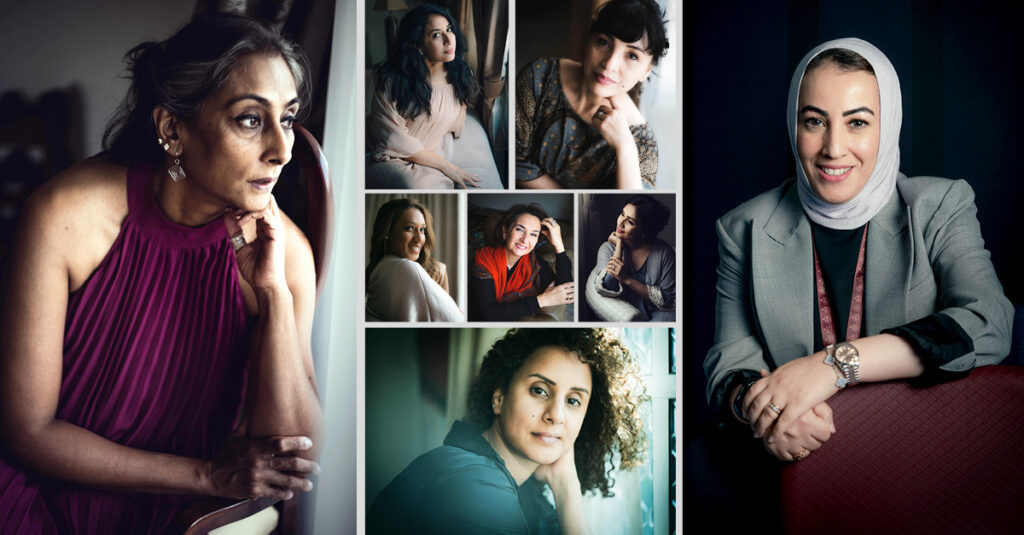
To me, Omani women are like beautiful gardens hidden behind strong, high walls. These walls have been built over time — to protect, to preserve, to offer shade from the burning sun and shelter from what does not belong. And when you are invited inside, you discover something truly special. Each garden is unique — filled with its own colours, scents, and textures. The beauty is not loud, but deep. There is a powerful femininity rooted in values, faith, family, career, and community.
Many women I photograph are stepping in front of the camera for the very first time — not because they lack opportunity, but because they are used to giving to others first. It is part of the culture: to care, to support, to serve.
They often come to a session with doubts. Some are shy and don’t know how to be in front of the camera. Some are always busy — with work, family, and others — and they forget about themselves. Some compare themselves to others and don’t feel beautiful enough. Many want to belong, to be like others — and at the same time, they want to feel unique.
What touches me is that these women are strong and generous, yet often forget to pause and receive. That is why these sessions are so meaningful — for many, it is the first time they are truly in the centre. Not to perform, but simply to be.
And when a woman allows herself to be seen and celebrated, she begins to glow. I always say — we can give so much more to others when we are full ourselves, not running on empty.
What are the stories that you create with your photography and since coming into Oman, what are the most heartfelt moments of love, joy and admiration that you have felt and experienced here?
Whether it is a phototherapy session for a woman, a family shoot, or a reportage from an event in Oman. The story already exists. It just needs to be told. My language is light, lines, colours, and poetry at the moment. I simply translate it and help people remember or capture their story. And of course, the most touching moment is when a woman sees her photos for the first time after a phototherapy session. These feelings are hard to describe. It is a meeting. A birth. A moment of acceptance. There are often tears, sometimes deep silence, sometimes joy. That moment fills me completely. I think this is why I keep doing this — because if my photography helps change the way a woman sees herself, I am ready to continue again and again.
What are the challenges and difficulties of living in Oman and engaging in photography here?
The biggest one is trust. Many people here are still very private, especially women. It takes time to build a connection and create a safe space where someone feels comfortable being photographed. In some cases, a photoshoot is a completely new experience — and it’s important to move gently, with full respect.
Many clients don’t like to show their photos publicly, even if they love the result. So, building a portfolio or growing through social media takes more time and patience. But I have learned to see this not as a barrier, but as part of the culture. It has helped me work more deeply, listen better, and appreciate every story I am allowed to tell. And when trust is there — the result is always powerful.
Please provide details of the legacy book – featuring stories of women from various villages in Oman – that you are planning? Is it going to be a photo feature and when do you plan to publish it?
This idea was born through my travels and new connections across the country. Every time I leave Muscat, I begin to understand Oman more deeply — the thoughts, traditions, emotions, and the way people carry themselves. And I realised something: in this vast ocean, there are so many hidden pearls — women with powerful, personal stories of resilience, wisdom, and faithfulness. These are the stories that deserve to be passed on — especially to the younger generation, who are growing up in a fast-changing world. The strength and values of their mothers and grandmothers can be a foundation — a deep root — for what is coming next. So why not preserve that in a beautiful way, through photographs and meaningful storytelling?
I am currently looking for support to make this project a strong and valuable contribution to Oman’s cultural heritage.
Oman is your second home now. Do you plan to take permanent residence here, or will you be going back if and when the war is over?
I don’t like to make absolute plans about the future. Life can change quickly, and I try to stay open to what comes. For now, my heart and my work are here. This country has welcomed me, and I hope I can continue to give something meaningful in return.
How many art exhibitions and workshops or other interactive sessions have you conducted here so far and are Omani women also part of these workshops and sessions?
Over the past years in Oman, I have taken part in exhibitions, led private sessions, and worked on personal and community-based photography projects. But what brings me the most energy now is developing workshops and creative educational programmes — especially for women and youth. One of the most meaningful moments was conducting a phototherapy-based workshop for Omani women leaders as part of the TASMU programme at the Royal Academy of Management, September 2024.
I also had the opportunity to present this concept to Dr Samir Al Adawi, professor of behavioural medicine, and his group of interns. Their thoughtful response and genuine interest left a strong impression on me. I truly hope to continue offering workshops and educational formats for different organisations in Oman — especially those working in meaningful, socially impactful fields.
I believe photography is not only art — it is a gentle but powerful tool for growth, self-awareness, and confidence. And I am ready to share it with more communities here in Oman.

0 Comments