
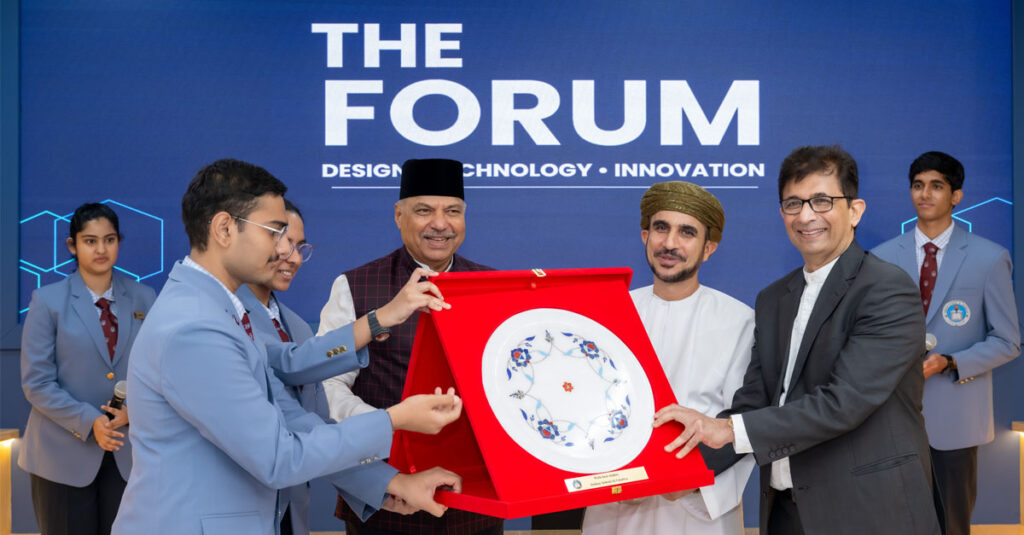
MUSCAT — Classrooms are changing, but the teacher will not be taken out of the classroom, promised Ahmed Rayees, president of the Indian School Al Ghubrah (ISG).“We don’t believe in taking away teachers out of the classrooms. Their value will remain forever,” Rayees, the man who planted the seeds of the schools’ visionary and multipronged hub, The Forum, said.
Rayees’ statement captured a powerful truth about the future of education: today’s schools may be suffused with technology and soon this may bring about changes in the educational environment, but the human element provided by educators will never be replaced.Although the role of the teachers are undergoing a massive transformation, and technology and artificial intelligence (AI) are reshaping the educational landscape, the human element remains completely “irreplaceable”, Rayees stressed. There is no way that teachers would be rendered obsolete, and the future of education sees the shifting of the teacher’s role from a traditional lecturer to a learning facilitator, mentor and emotional anchor – qualities that AI cannot replicate, he averred. This is in line with the ISG philosophy, for even as the school implements smart, digital classrooms and interactive software, the emphasis is that technology is but a tool.
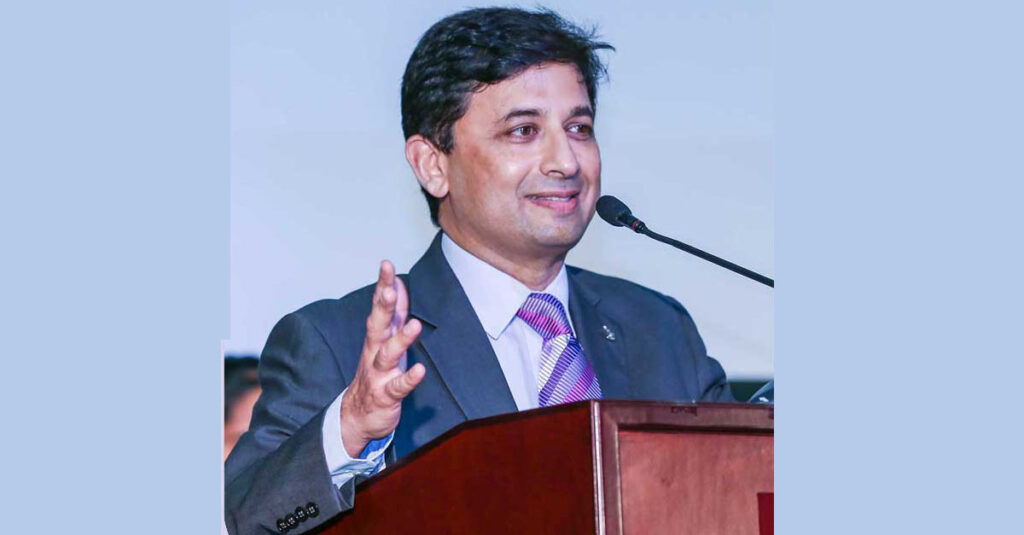
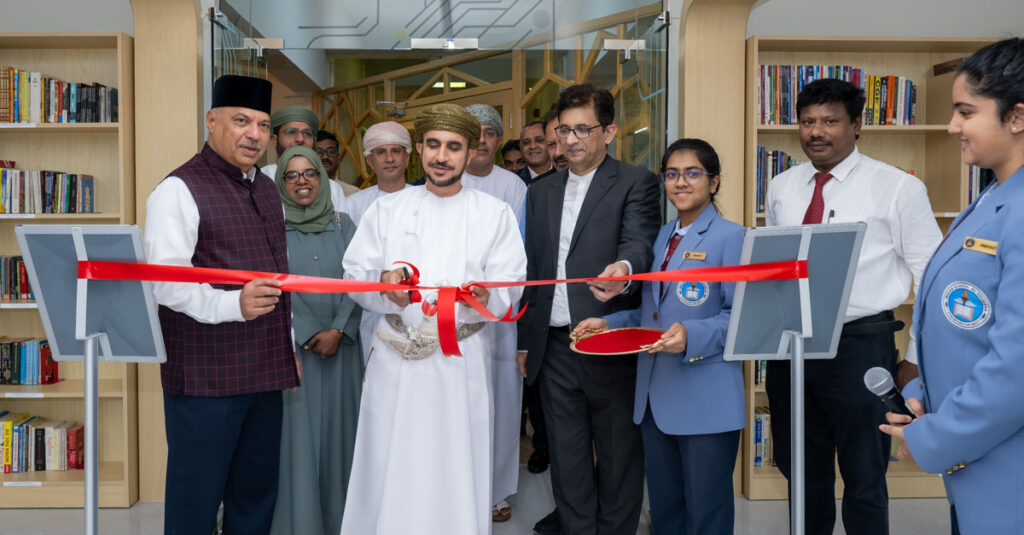
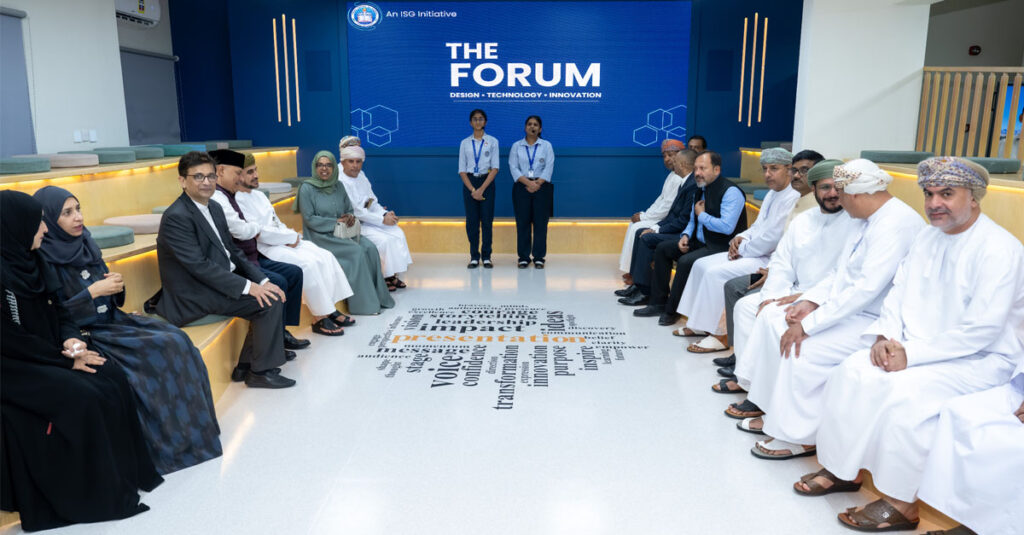
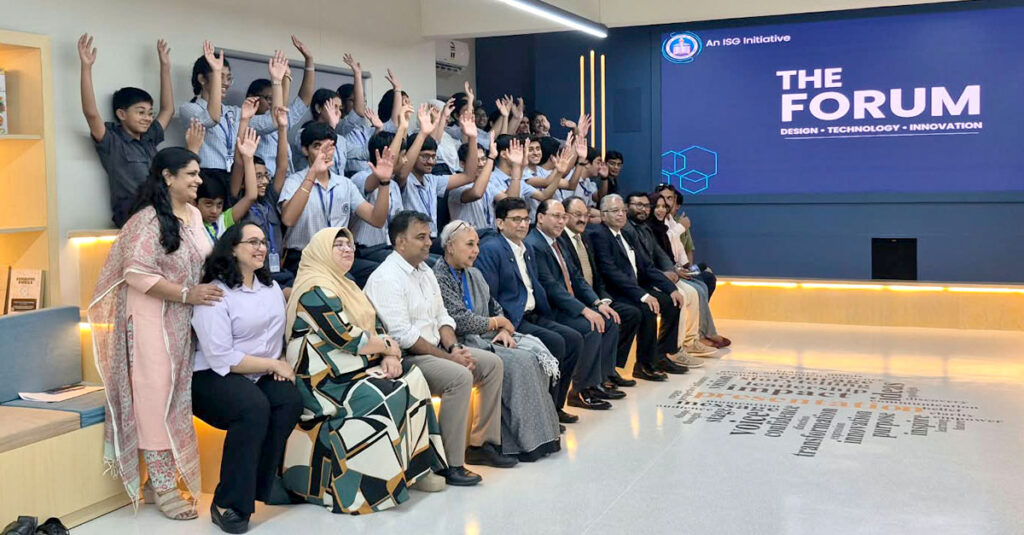
Rayees spoke to the BLACK & WHITE at The Forum, an innovative multipronged hub, which encourages ideas of students to evolve to concepts and to real-world solutions. The Forum, which is deemed as a centre where design, technology and human values converge to address real-world challenges, recently opened its doors to a segment of dignitaries and the media to display the digital, technology and innovation transformation happening at the ISG. The dignitaries included Davis Kallukaran, the founder and managing partner of Crowe Oman (Crowe Mak Ghazali LLC), Dr N M Sharafudeen, chairman, Indian Gulf and Middle East Chamber of Commerce (INMECC) and Eng Afsar Ali Z, risk management specialist, Insure & Secure – Insurance Brokerage Company W.L.L. Papri Ghosh, principal, ISG was also present.
Reading and books
“There is a lot of screen time coming into play, but we cannot abandon the books, can we?” Rayees went on pointing out to the ‘READ’ logo installation on the wall just outside The Forum hub. He also noted physical books and open bookshelves at the ISG encourages positive habits in the students.
The DTI mindset
Referring to The Forum, he said the concept grew from a vision he shared with the school four years ago, which was also encouraged and supported by the founder, Dr P Mohamed Ali. “I realised that the new generation is much more knowledgeable than the previous generation. Also, if you look around, everyone has become an innovator.
“Take a pen or a phone for example. It has got design, technology and innovation in it. “So we wondered how to get the child into that mindset—the design mindset, the technology mindset, as well as an innovative mindset. On that basis, we built up this concept of The Forum, and what we’ve done is we made sure that all the subjects end up into DTI (design, technology, and innovation).” As learning moved beyond textbooks, they envisioned a space where students could question, research, collaborate, design, experiment and create. Rayees also noted that ISG moved beyond the idea of a conventional AI or robotics laboratory to create an ecosystem that could support innovators across disciplines. Introducing the DTI at the ISG would help in transforming the traditional classrooms into active, human-centred environments that foster 21st century skills, he noted.
Educational ecosystem
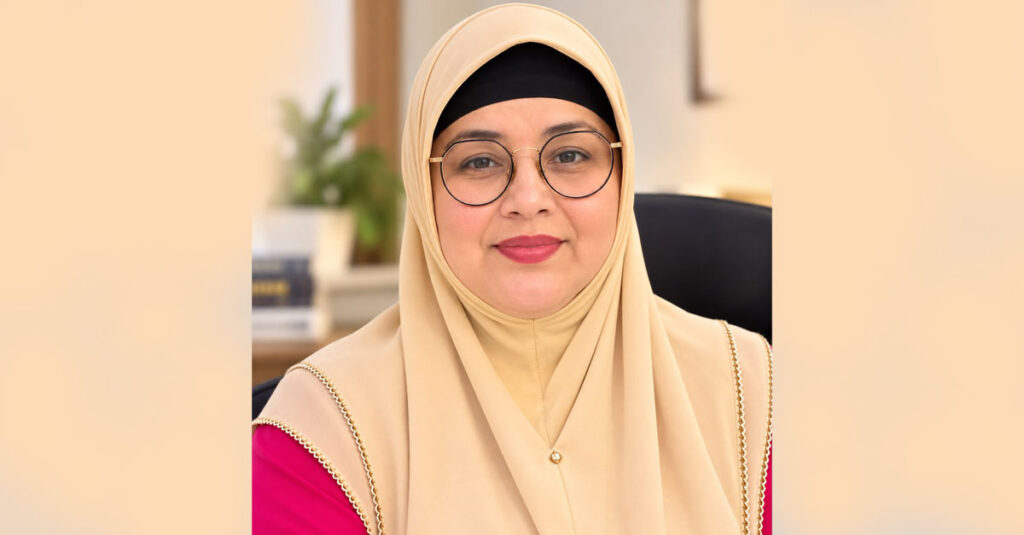
Dr Hussaina Azgar, vice principal of the ISG and in charge of The Forum, said the hub was an educational ecosystem designed to cultivate children’s natural curiosity and turn their raw ideas into real-world solutions.
“It evolved from a basic school library into an integrated hub. Children are encouraged to submit any idea without being hesitant or fear of being ridiculed,” she said, adding that the focus is first on the essence behind the ideas, which is then refined by mentors.
Referring to the innovation blueprint and the challenge cycle set by The Forum, she said the department follows a precise process to transform a student’s verbal concept into an actionable project. “First, a student submits a raw concept or a problem they have observed. The child then receives a structured framework. Writing forces them to think deeply, question their logic, and transition from verbalising to concrete planning. “Mentors curate past literature and market data for the student. If the idea already exists, the student is mentored on how to shift and innovate it further rather than giving up,” she said.
DTI challenge
Then it is put through the DTI Challenge. “We put the project through the DTI framework, prompting the child to break down the design aesthetics, the technological implementation, and the innovative core of their solution,” she said, adding that after this process the mentors review the fully completed blueprints to guide students toward collaboration and development.
The grocery stores example
The key methodology was in identifying the problem. “Students are taught that to solve a problem, they must look at the patterns and behaviour of people around them,” she said, adding that the students were sent to grocery stores so that they could find out for themselves the difference between just going to shop versus going to a grocery store purely to observe. “This allows them to understand what sells more, what sells less, and why selling rates drop.”
For Grade 12 students with specific academic streams, the innovation framework is woven into their current subjects, Dr Hussaina said. “When a student finds a specific concept appealing within their stream, they are guided or connected to books, sciences, and humanities and urged to dive deeper into that subject matter,” she said.

0 Comments