
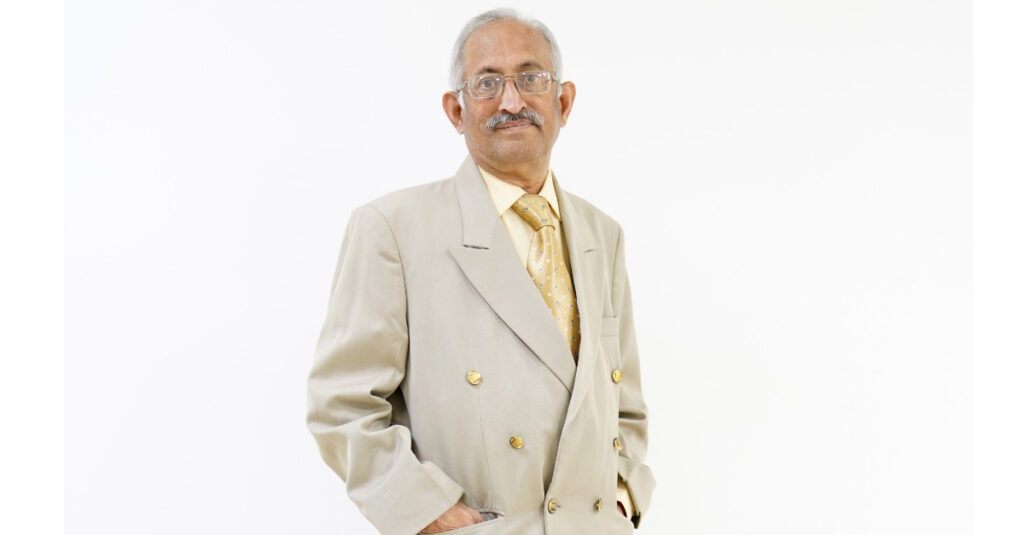
Recent advancements in neurosurgery have helped employ surgery in conditions like Parkinson’s disease, cerebral palsy, autism, diabetic neuropathy pain and even addiction, a top visiting neurosurgeon to Oman reveals.
“Surgery has been employed, especially in patients for whom medicines were not working or are causing side effects, Dr R. Ramnarayan noted.
“Previously, they were considered untreatable beyond a particular point and patients continued to suffer,” the 60-year-old DR RAMNARAYAN, who has dedicated the last 33 years of his life in the pursuit of medical excellence, told BLACK & WHITE, recently.
Recent advancements
Dr Ramnarayan, who is consultant restorative and functional neurosurgeon, is associated with two hospitals in Muscat – Gulf Specialized Hospital in Wattayah and Muscat Private Hospital in Bausher – where he is a visiting consultant in neurosurgery since 2014. Although there was a gap during the pandemic, he restarted in 2023. “I am now developing some of the surgeries – like surgery for Parkinson, cerebral palsy, addiction etc., — in Muscat,” Dr Ramnarayan, who is associated with many other hospitals, both in India and abroad, revealed. He added that “recent advancements” in the medical field had helped him “in many ways”.
Right patient for surgery
“By the grace of God, I have been successful in most of my work. The second most important thing which helps me to achieve success is that I put a lot of effort in selecting the correct patient for surgery. The third important thing is my team of dedicated colleagues who ensure that everything goes as per clockwork. I also spend a lot of time developing rapport with the patients and I am also good at managing their expectations,” Dr Ramnarayan explained.
Change lives of people
Dr Ramnarayan noted that there were plenty of surgeries that he did, “which has changed the lives of people”. “Some examples include surgery for autism, surgery for addiction, surgery for diabetic neuropathy pain and many more. I would think and request more neurosurgeons to take up these procedures so that more patients can benefit.
EXCERPTS:
It is said that neurosurgery has entered a new era, with “cutting-edge advancements transforming how conditions affecting the brain and spine are diagnosed and treated”. Could you expand on this? What exactly has this new era of neurosurgery brought about?
Yes, neurosurgery has definitely entered into a new era compared to say, 20 years back. This has been brought about by innovations and discoveries all around including in the diagnosis and investigative mechanisms. Even though clinical assessments still are very important, the introduction of new investigative mechanisms like CT scan and MRI have changed the way neurological problems can be investigated and correct diagnosis made. Other procedures like PET scans have added to the armamentarium. This way prompt, accurate diagnosis and treatment becomes possible.
What have been some of the most ground-breaking developments in neurosurgery in recent times? And how have patients benefitted by these recent approaches?
There have been numerous developments that have led to more successful outcomes in neurosurgery patients. As mentioned earlier, CT scan and MRI were incomparable investigative modalities. Other developments, like in angiography techniques, helped save many blood vessel disease patients. Development of many new surgical instruments and also swift developments in anaesthesia made neurosurgery very safe and sure.
Could you explain how advancements in neuro-navigation and real-time imaging have managed to revolutionise brain and spine procedures?
Previously tumours and other pathologies in the depth of the brain and near important areas (like speech areas) were ‘no go’ areas because of the postoperative deficits that surgery of these areas could cause. But with neuro-navigation and real-time imaging, we can nowadays safely and completely remove these tumours. Real-time imaging in neurosurgery, particularly with intraoperative MRI (iMRI) and ultrasound, provides immediate feedback to surgeons during procedures, helping them assess the surgical result and make adjustments in real-time. This enhances precision, reduces the need for repeat operations, and helps protect critical structures like blood vessels and nerve fibres.
How is artificial intelligence (AI) and machine learning shaping the future of neurosurgery?
In neurosurgery, AI has been utilised for differential diagnosis, pre-operative evaluation, and improving surgical precision. Many of these applications have begun to mitigate risks of intraoperative and postoperative complications and post-operative care. Recent studies demonstrate that machine learning (ML) holds significant potential in neuro-oncological care, spine surgery, epilepsy management, and other neurosurgical applications. Machine learning techniques have proven effective in tumour identification, surgical outcomes prediction, seizure outcome prediction, aneurysm prediction, and more, highlighting its broad impact and potential in improving patient management and outcomes in neurosurgery.
How old are you and how many years are you into this field? How has the recent and perhaps continuous advancements helped you remain at the forefront of neurosurgical excellence?
I am 60 and have been in neurosurgery for about 33 years now. The recent advancements have helped me in many ways. For example, we are now able to do surgery for conditions like Parkinson’s disease, autism etc., especially in those patients where either medicine is not working or are causing side effects. Previously they were considered untreatable beyond a particular point and people continued to suffer.
Which hospital are you currently associated with and explain the connection with Oman. How long have you been working as a consultant in Oman and what are the treatments and procedures conducted here in the Sultanate?
I am associated with two hospitals in Muscat, one being the Gulf Specialized Hospital in Wattayah and the other being Muscat Private Hospital in Bausher. I have been a visiting consultant in Oman in neurosurgery from 2014 but had to take a big break during the corona pandemic. I restarted in 2023 and am now developing some of the surgeries like surgery for Parkinson disease, surgery for cerebral palsy, surgery for addiction etc., in Muscat.
Have you met with many successes in your surgical interventions both in India and abroad and could we also look at the challenges that you may have faced in your journey?
By the grace of God, I have been successful in most of my work. The second most important thing which helps me to achieve success is that I put a lot of effort in selecting the correct patient for surgery. The third important thing is my team of dedicated colleagues who ensure that everything goes as per clockwork. I also spend a lot of time developing rapport with the patients and also am good at managing their expectations.
Tell us in brief about your accomplishments and the joy it has brought you and at the same time the disappointments you may have encountered in your journey so far?
The joy one can experience when you change the life of a particular patient is immense and cannot be described. An example is when you make a paraplegic to walk with your surgery or when you stop the dystonia in a cerebral palsy child. I also have had my share of disappointments when patients do not understand the effort you are making in giving them a better life. But the biggest disappointment will be when your own colleagues make unnecessary comments on your work even though the results have been good.
What is that one particular thing that you are aiming for in the future in your neurosurgical adventure?
There are a lot of surgeries that I do which can change the lives of people. Some examples include surgery for autism, surgery for addiction, surgery for diabetic neuropathy pain and many more. I would humbly request more neurosurgeons to take up these procedures so that more patients can benefit.
Would you be able to relate to us some briefs on the brave patients who had entered into the complex and perhaps fear-invoking world of neurosurgery treatments and come out smiling?
There are many stories and I think we cannot discuss all of them here. Moreover, we need to take permission from them. But those interested may visit my website www.lakshmineuroclinic.com and see the videos and testimonials themselves.
Have you engaged in the ground-breaking procedure called ‘awake brain surgery’ and helped repair the damage or removed brain tumours located in critical areas of the brain?
I do not do brain surgery for brain tumours. I do only very special surgeries. In fact, I regularly do surgery for Parkinson’s disease which takes about 10 to 12 hours and is done under local anaesthesia with the patient being fully awake about 90 percent of the surgery time. In awake brain surgery, the surgery is done under full anaesthesia, but the patient is woken up in between for some time to do some assessments.
You had mentioned that you engage in many surgeries that not many may have attempted like surgery for Parkinson’s disease; surgery for spasticity as in cerebral palsy or spinal cord injury; surgery for neurogenic bladder; surgery for chronic pain; surgery for intractable OCD; surgery for depression; surgery for addiction etc…?
Yes, by the grace of God, I am able to do these surgeries. But as I already mentioned, these surgeries are not for every patient. There are a lot of assessments done by various doctors (we work as a team) before we finally decide that a particular patient will benefit from my surgery. I am developing this team here in Muscat.

0 Comments